
LiFePO4 vs Tubular vs Gel Batteries: Which Lasts Longest in the Heat?
All three can run a solar system well. They differ in how long they last, how much care they need and what they cost over their life. Heat changes the picture more than most buyers expect.
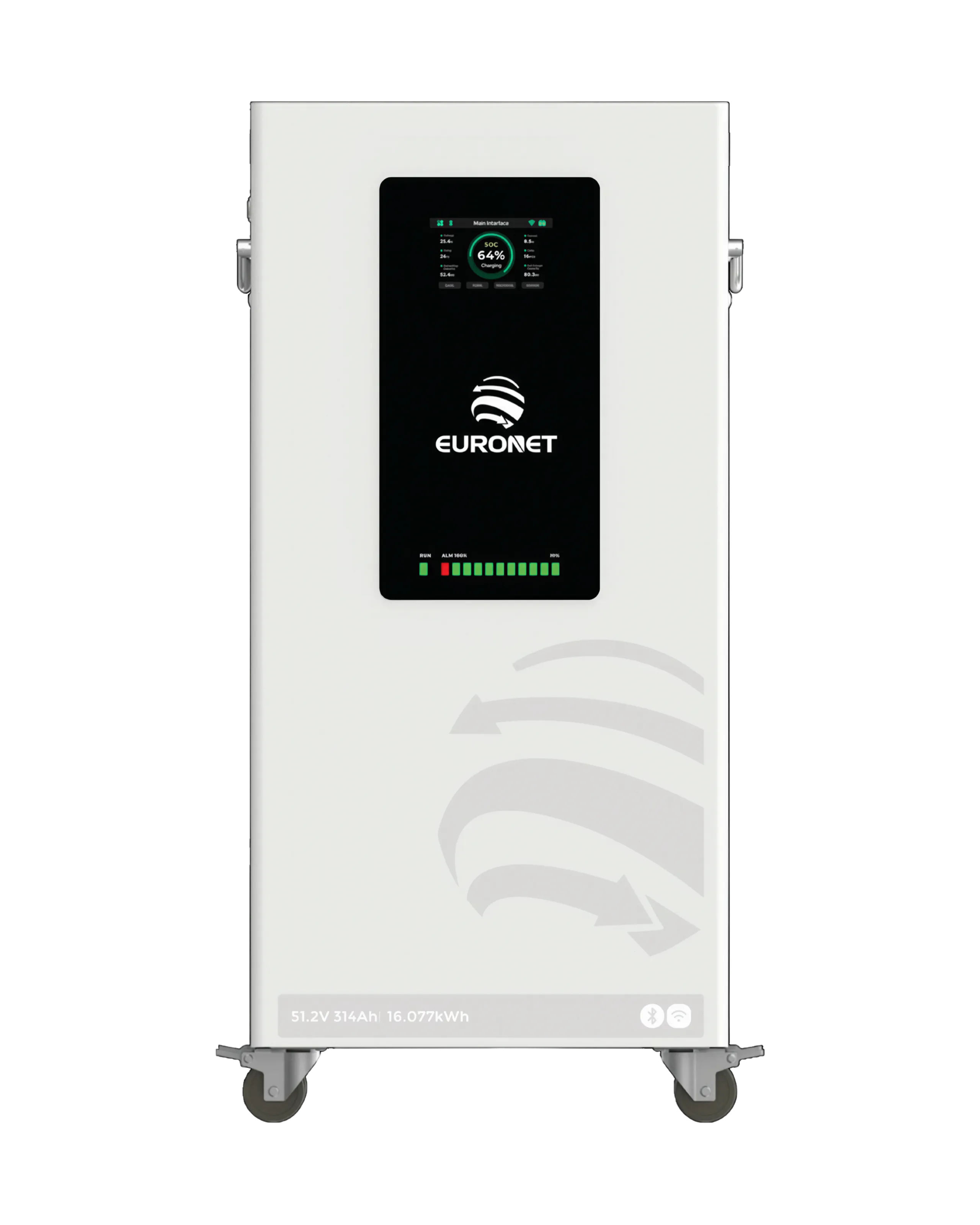
Three Chemistries, Three Different Jobs
Tubular batteries are flooded lead-acid batteries with tube-shaped positive plates. They are tough, tolerate rough charging and are the cheapest to buy per kWh. They also need topping up with distilled water and a ventilated space. Gel batteries are sealed lead-acid batteries with the electrolyte set into a gel. There is no water to add and nothing to spill, so they can sit indoors. They are fussier about charging voltage, and a charger set too high will dry them out early. Lithium iron phosphate (LiFePO4) batteries cost the most up front. In return they last many more cycles, can be discharged more deeply, charge faster and weigh much less. A built-in battery management system (BMS) protects the cells and, on many hybrid inverters, talks to the inverter directly.
In the EURONET range
All three chemistries, for different markets
Battery families
- NEO SeriesLiFePO4
- Tubular C10 and C20Flooded lead-acid
- Blue, Eco and FT seriesGel
How They Compare
Typical figures across the market. Always check the datasheet of the specific model you are buying.
LiFePO4 (lithium)
Highest upfront cost, lowest cost per cycle
- Usable depth of discharge: about 80–90%
- Cycle life: typically 3,000 to 6,000 cycles
- Maintenance: none
- Much lighter for the same capacity
- BMS stops charging at its temperature limit
Tubular (flooded)
Lowest upfront cost, needs regular care
- Usable depth of discharge: about 50%
- Cycle life: typically 1,000 to 1,500 cycles
- Maintenance: top up with distilled water
- Needs ventilation while charging
- Life shortens quickly above 25 °C
Gel (sealed)
Clean and sealed, moderate life
- Usable depth of discharge: about 50%
- Cycle life: typically 500 to 1,200 cycles
- Maintenance: none, but charge voltage must be right
- Suitable for indoor cabinets
- Ages faster in high heat, like all lead-acid
Why Heat Matters So Much in the Gulf and Africa
Battery ratings are usually quoted at 25 °C. A battery room in Riyadh in July or a steel container in northern Nigeria can sit well above that for months. For lead-acid batteries, a widely used rule of thumb is that service life roughly halves for every 8 to 10 °C of sustained temperature above 25 °C. A tubular battery that would last five years in a cool room may give closer to half that in a hot, closed store. LiFePO4 is not immune to heat, but its chemistry is more stable and it starts with many more cycles to lose. Most lithium batteries also have a BMS that stops charging when the cells get too hot. That protects the battery, though it can interrupt backup if the room is badly ventilated. Whatever the chemistry, the cheapest fix is placement: shade, airflow and keeping batteries off sun-facing walls. That often adds more years than any upgrade.
25 °C
The temperature most battery ratings assume
C10 and C20: Compare Like With Like
Tubular and other lead-acid batteries are often sold with a C10 or C20 rating next to the Ah figure. It tells you how fast the battery was discharged when its capacity was measured: over 10 hours or over 20 hours. The same battery shows more amp-hours at C20 than at C10, because a slower discharge gets more energy out. So a 200 Ah C20 battery is not the same as a 200 Ah C10 one. When you compare quotes, make sure both figures are measured at the same rate. If your loads drain the battery over an evening rather than a full day, the C10 figure is closer to what you will actually get.
Same battery
A higher Ah figure at C20 than at C10
Cost per Cycle, Not Price per Battery
A fairer comparison is what each battery costs for every kWh it delivers over its life: Cost per kWh cycled = battery price ÷ (capacity in kWh × usable depth of discharge × cycle life) Take a 10 kWh lithium bank used to 80% for 4,000 cycles. Over its life it delivers about 32,000 kWh. A 10 kWh tubular bank used to 50% for 1,200 cycles delivers about 6,000 kWh. Even if the lithium bank costs three times as much, it works out cheaper per kWh, provided the system really does cycle it every day. That condition is important. A site that only needs backup during the odd outage may see its battery age out long before the cycles are used up, and there the cheaper chemistry can be the better buy.
Lifetime output
Same 10 kWh bank size, cycled daily
LiFePO4 at 80% for 4,000 cycles
Tubular at 50% for 1,200 cycles
Which Battery for Which Site
Choose LiFePO4 when
Daily cycling makes the higher price pay back.
- The system cycles every day, such as homes with long daily outages or off-grid sites
- It is paired with a hybrid inverter that supports BMS communication
- Space, weight or maintenance visits are limited
Choose tubular when
Upfront budget matters most and someone can look after it.
- Budget is the main constraint
- Someone can check water levels regularly
- The battery sits in a ventilated area away from living space
Choose gel when
You need a sealed battery that can live indoors.
- The battery goes indoors or in a closed cabinet
- Maintenance visits are rare
- Cycling is moderate, such as UPS and backup use
Common questions
What is the best solar battery for hot climates?
For daily cycling, LiFePO4 usually lasts longest in the heat, because it starts with far more cycles and has a stable chemistry. Placement matters as much as chemistry: any battery kept in a shaded, ventilated spot will outlast the same battery in a hot store room.
Can I replace lead-acid batteries with lithium on the same inverter?
Sometimes. The inverter needs a lithium charging profile or adjustable charge voltages, and ideally BMS communication. Check the inverter datasheet before switching, because the wrong settings can trip the BMS or leave the battery undercharged.
Can I mix lithium and lead-acid batteries?
No. They charge at different voltages and age at different rates, so one type ends up overcharged or undercharged. Keep each bank to one chemistry, one model and ideally one batch.
How long does a tubular battery last?
Often three to five years in normal use, and less in hot rooms or when it is regularly discharged below about 50%. Topping up with distilled water and keeping the terminals clean makes a real difference.
Do gel batteries need maintenance?
They need no water, but they are sensitive to charging voltage. Set the inverter or charge controller to the gel profile given on the battery's datasheet.
Related guides
Choosing a battery range to stock?
Tell us your market and the systems your customers buy. We will suggest a lithium, tubular and gel mix from the EURONET range.